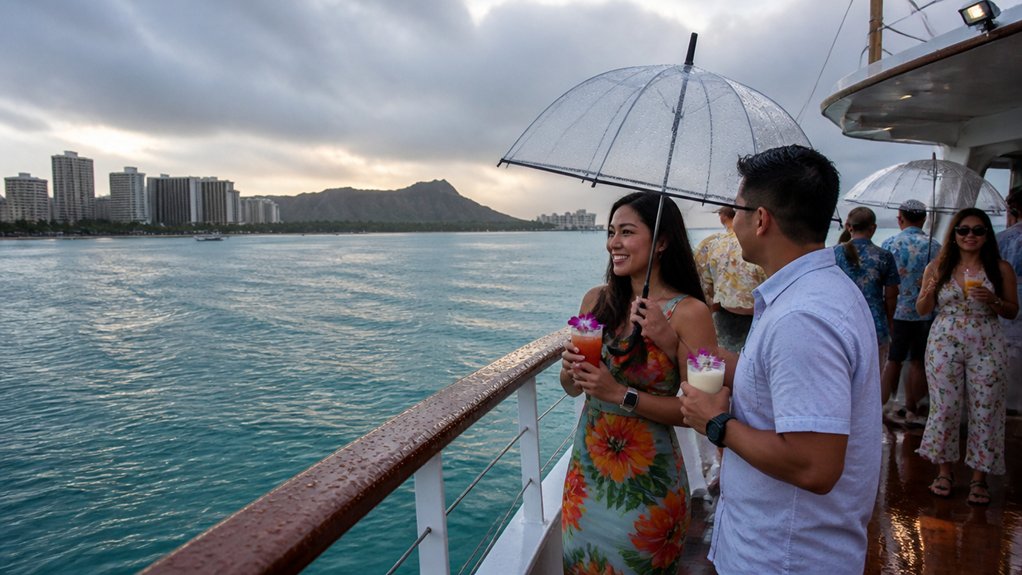
You might picture a Waikiki cocktail cruise and assume rain ruins it, but a light shower often just taps the canopy while Diamond Head fades into silver mist and your drink stays cold. The real question isn’t drizzle. It’s wind, swell, and whether the harbor starts tossing cups and nerves. Some rainy departures feel cozy and cinematic. Others turn choppy fast. So how do you tell which kind of night you’ve got?
Key Takeaways
- Light rain usually does not cancel a Waikiki cocktail cruise; operators care more about wind, swell, chop, and safety conditions.
- Go if it is only drizzling and the boat has canopy-covered seating, but expect some wind-blown mist or damp shoes.
- Reschedule if heavy rain comes with strong winds, high surf, rough seas, or a Small Craft Advisory.
- Reschedule too if recent heavy rain muddies the water and clear views, snorkeling, or comfort matter to your group.
- Check messages and call the operator before leaving, since the final go or no-go decision often comes 15 to 30 minutes before departure.
Should You Take a Waikiki Cocktail Cruise in Rain?
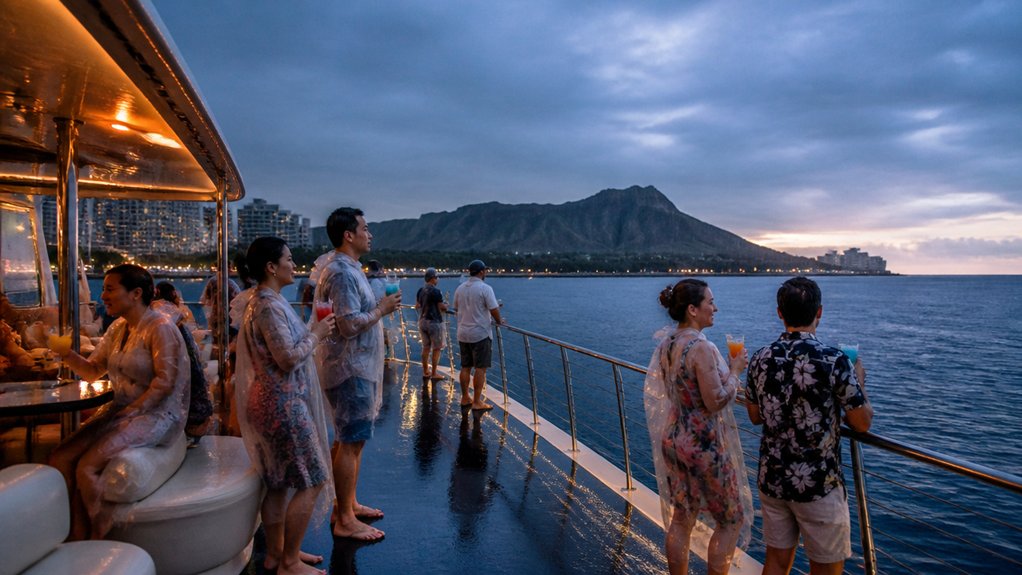
Even if the sky turns gray, you can still have a good time on a Waikiki cocktail cruise in the rain. If you’re picturing a soaked slog, think again. On many boats, canopy-covered decks, shaded seats, cushioned benches, restrooms, and a working bar keep you comfortable during light rain. A Waikiki Sunset Cruise can still feel cinematic, with silver water, warm trade winds, and that soft hiss of showers on the roof. Most Waikiki cocktail cruises run for a set duration, so a passing shower often doesn’t change the overall experience much. If you’re hoping for crystal-clear glass-bottom views or reef snorkeling, though, rain runoff can muddy the water long after the clouds pass. Check marine forecasts before you go, arrive early for updates, and follow the operator’s call. If they cancel for safety, you’ll usually get a full refund anyway without drama later.
When the Cruise Usually Still Runs
Usually, a little Waikiki rain doesn’t stop the boat. If you see gray skies and light showers, you can usually expect the cruise to still run. Operators care more about wind, swell, and harbor chop than a passing sprinkle. When the water stays calm and the breeze stays low, you’ll likely board right on schedule.
That means VIP guests at 1:30 PM, general boarding at 1:45 PM, and the gate closing at 1:55 PM for a 2:00 PM departure. Following the usual arrival time helps you stay relaxed even if the weather looks uncertain. Plan to arrive early and check updates, but don’t assume clouds mean trouble. Short showers often slide through fast. Covered decks and canopies help keep you dry enough to sip comfortably. Sometimes the moody sky even turns sunset brighter, with pink and gold streaks doing the extra work overhead.
When You Should Reschedule Instead
Rain alone rarely ruins a Waikiki cocktail cruise, but some forecasts should make you hit pause. You should reschedule if heavy rain arrives with high winds, a Small Craft Advisory, harbor swell, or high surf. A forecast calling for Small Craft Advisory conditions or seas building into the 15 to 19 foot range Monday night into Tuesday is a clear sign to postpone. Those conditions can turn the catamaran’s deck slick, the ride bouncy, and your sunset drink into a test of motion sickness.
If underwater viewing matters most, reschedule after heavy rain in the previous 24 to 48 hours. Runoff can cloud the water, blur reef details, and mute fish and coral colors. You should also rethink the trip with young kids, during pregnancy, or if anyone gets seasick easily. Even with stabilization, choppy water can feel relentless. Tight dinner plans afterward? Reschedule and save yourself the scramble that night too.
How Operators Decide to Sail or Cancel
You’ll notice operators put sea conditions first, so they watch wind, swell, wave height, and any Small Craft Advisory far more closely than a brief gray shower. If the harbor stays calm and the offshore water looks manageable, you’ll often still sail, but strong wind, high surf, or rough seas usually stop the trip fast. Because crews keep checking conditions right up to boarding, you might get a last-minute update, a nearshore route instead, or a refund if safety says today’s mai tai belongs on land. Many also review basic boater safety guidance, because safe operation decisions depend on changing conditions and avoiding unnecessary risk.
Still comparing Waikiki Sunset Cruise?
Ask for tour ideas, hotel suggestions, or a simple trip plan that combines both.
Trip Helper
Sea Conditions First
Even when showers drift across Waikiki, operators care far more about what the water is doing below the bow. If harbor wind, swell, or wave height starts building, your cruise decision shifts fast. Light rain usually isn’t the deal breaker. Strong winds, large swell, and rough seas are. That’s when you’ll most often see a reschedule, cancellation, or refund.
If you’re prone to motion sickness, seasickness solutions can make a rainy-day sailing much easier when conditions stay marginal but safe.
You can think of boarding cutoff time as the last practical checkpoint. Before the gate closes, crews can still change plans, shorten the route, or call it off if motion looks unsafe. Boats with covered decks and stabilizers may handle choppy water better, so you might still sail along the shoreline instead of heading farther out. Bring your curiosity, watch the water, and stay flexible.
Weather Monitoring Process
While a gray sky can look dramatic over Waikiki, the real decision starts with what the captain and crew see in the forecast, on radar, and out on the water.
You aren’t guessing from your hotel balcony. Operators check NOAA marine forecasts, Weather.gov Honolulu radar, and live wind and wave reports near Kewalo Basin. They watch how showers move, how the ocean breeze feels, and whether harbor conditions still look smooth at final check-in, usually 15 to 30 minutes before the 2:00 PM departure. Since many cruises do not include hotel pickup, guests also need to judge road and walking conditions to the harbor in rainy weather.
| Tool | What you notice | Why it matters |
|---|---|---|
| Forecast | Cloud bands | Timing |
| Radar | Shower cells | Location |
| Wind reports | Gusts rising | Comfort |
That’s the weather dance backstage daily.
Safety-Based Cancellation Triggers
Watch what makes a captain pause, and it’s usually not a passing shower. You’ll see cancellations tied to wind, swell, rough seas, or a small craft advisory, not light rain. Before departure, crews check Kewalo Basin, wave height, and wind gusts. If the harbor stays calm and the rain stays brief, you’ll likely still sail under a covered canopy, with SeaKeeper stabilization helping the boat stay steady. Most Waikiki cocktail cruises depart from Kewalo Basin, so harbor conditions there play a big role in the go-or-cancel decision.
What changes the call? Heavy rain can muddy the water, stir up chop, and cut visibility for glass-bottom viewing. If runoff or surf makes conditions unsafe for you or the crew, operators will reschedule or refund. They keep watching forecasts right up to the 1:55 PM gate close, then message you fast if plans shift that day.
How Rough Seas Change the Ride
Brace yourself, because rough seas can turn a laid-back Waikiki cocktail cruise into a very different kind of ride. Even a 50-foot catamaran will pitch and roll when wind and swell build, and if you’re prone to motion sickness, that mai tai may feel ambitious. A SeaKeeper helps, but it can’t erase every lurch. You might not enjoy the ocean in the same carefree way when chop blurs the glass-bottom panels and stirred sediment hides reefs and fish. Crews often swap open-water runs past Diamond Head for shorter shoreline routes, so wildlife odds can drop. Conditions on a Waikiki cocktail cruise can shift from smooth sailing to bumpy seas quickly when weather and swell change. Boarding also gets trickier. Wear non-slip shoes, hold the rails, and listen for crew instructions. If conditions worsen near departure, check notices. A delay, reschedule, or cancellation may save the day.
How Rain Affects Sunset and Ocean Views
Even when the ride stays manageable, rain can change what you actually see. On a Waikiki cocktail cruise, light showers can actually help. During sunset sailing, broken clouds sometimes turn the sky into a watercolor wash, with peach, gold, and violet spreading under darker cloud cover. You may get a glowing horizon even while one side of Honolulu looks gray.
Rain also softens other views. Drops on the surface and a little shower chop add glare and ripples, so reflections smear and distant details on the skyline or Diamond Head look less crisp. Underwater visibility usually falls faster than sunset color. With less light getting through, reef scenes and glass-bottom viewing look dimmer and flatter. If rain turns heavy with wind or swell, crews may stay closer to shore, reducing those wide-open ocean vistas. If you’re deciding whether to go or reschedule, the best time of year can make passing showers easier to work around.
Can You Still See Turtles, Dolphins, or Whales?
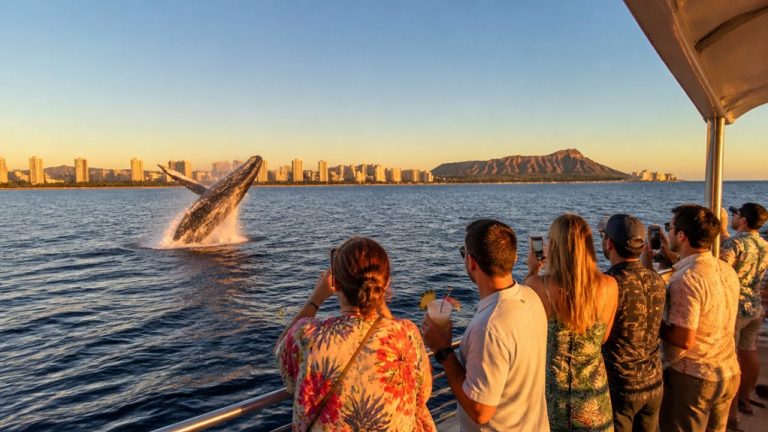
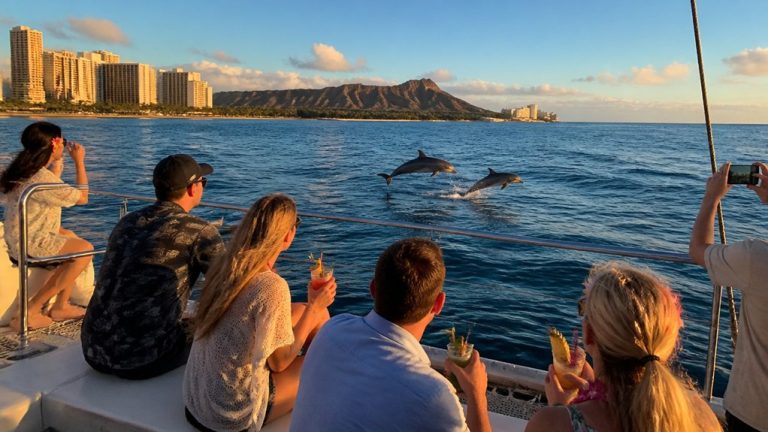
Usually, yes, you can still spot turtles, dolphins, and sometimes whales in the rain, because these animals have to surface to breathe and they often show up near shorelines and reef edges. Light showers rarely stop sightings, so you may catch honu, or sea turtles, bobbing up beside darker reef patches, and spinner dolphins slicing through calmer water. On some Waikiki cocktail cruises, dolphins are a known highlight even when conditions are a little gray. What matters more is sea state. If wind or swell turns the surface choppy, waves can hide quick surfacings and distant blows. In heavy rain, runoff can cloud the water and ruin glass bottom views, yet whales and dolphins may still appear if seas stay calm. Crews often angle closer to sheltered shoreline water, where your odds of seeing turtles and dolphins can actually improve there.
Will You Stay Dry on Board?
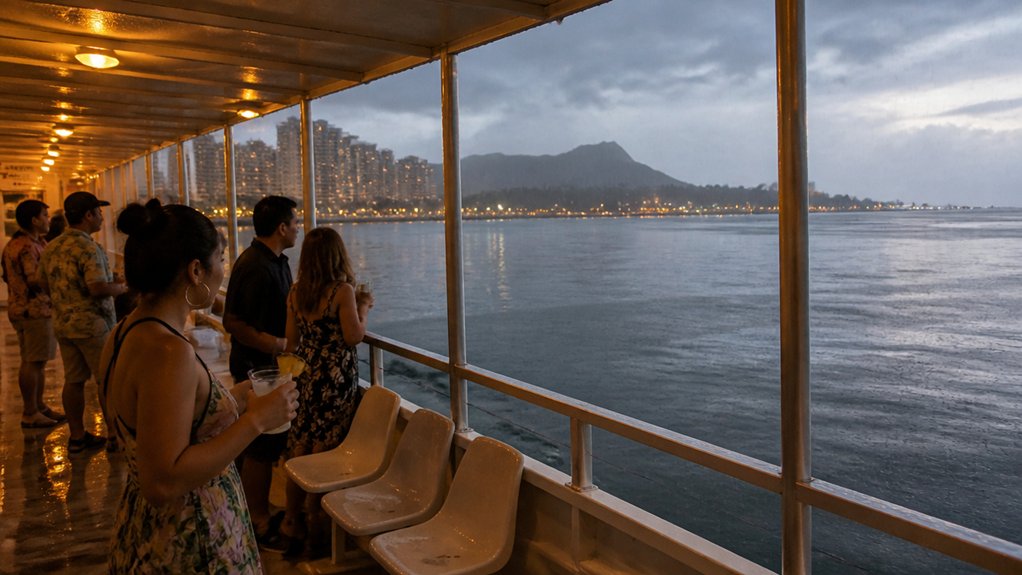
You’ll usually stay mostly dry under the canopy-covered seating, especially if you board at Slip D108 and settle in before one of Honolulu’s quick showers slips through. You can still catch a little spray or wind-blown mist, though, so your shoes might get damp even while your drink and phone stay better protected than they would on an open deck. Bring a light waterproof jacket and a dry pouch, and you’ll be ready if the breeze picks up and the rain decides to linger. It also helps to pack a few cocktail cruise essentials so a passing shower doesn’t catch you unprepared.
Covered Seating Areas
A lot depends on where you sit, but Waikiki cocktail cruises on boats like the Moana Catamaran do give you solid cover when a quick rain shower drifts through. You’ll usually find shaded seating and canopy-covered decks that keep most passengers comfortable and largely dry. If you want the best balance of shelter and scenery, aim for best seats under the canopy where you can still enjoy Waikiki views without taking the full brunt of the rain. Under that cover, seats often stay usable, phones stay safer, and even complimentary photo gear gets a better chance of making it home unbothered. If the rain briefly picks up, you can duck into shaded lounges or use the onboard restroom without turning the outing into a soggy test of character. Still, bring a rain jacket or a dry pouch for valuables, just in case. Staying dry helps comfort, not motion, so if you’re prone to seasickness, plan ahead.
What Spray Reaches
Covered seats handle quick rain well, but ocean spray plays by its own rules. A canopy blocks most light showers, so you usually won’t get soaked just sitting on board. But chop can toss mist into the mid-deck when waves slap the hull, and the exposed edges or nets can turn damp fast. If you choose a swim-and-sail setup or lounge low near the water, you’ll feel more spray in rough swells or wind-driven rain. On the Lokahi, SeaKeeper stabilization cuts rolling, which helps reduce random splashes. Still, if the boat meets waves at an angle in stronger wind, pockets of spray can still reach you, your camera, and that cocktail you’re trying to sip gracefully. Tonight belongs to the sea’s mood, not yours. If weather makes arrival feel hectic, planning for Waikiki parking in advance can make the evening easier before you even step aboard.
Rain Gear Tips
Packing smart makes a rainy Waikiki cruise feel easy instead of soggy. The Moana Catamaran’s canopy-covered deck and shaded seating keep you mostly dry during short Honolulu showers, so you’ll usually need only a breathable waterproof windbreaker or light rain jacket. For first timers, this simple setup makes rainy sail prep much easier to manage. Choose polyester or nylon, and skip heavy cotton that clings and chills. Wear quick-drying clothes and non-slip closed-toe shoes. Stash your phone or camera in a dry bag because spray can still sneak past the canopy near open railings. Pack a small towel or dry change for later. Sip your complimentary drink and listen to the rain tap overhead. If a longer storm looks likely, reschedule for true dryness and less onboard splashing. You’ll thank yourself when the breeze turns cool after sunset.
What to Wear for a Rainy Cruise
Slip into a lightweight waterproof windbreaker or a breathable rain jacket before you board, and you’ll block sea spray and that cool harbor breeze without feeling trapped in your own layers.
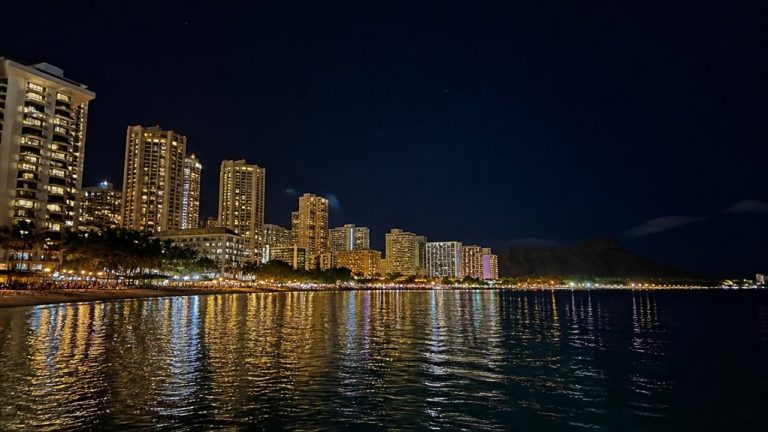
Add a quick-drying fleece or synthetic mid layer, because the canopy keeps you drier, not warmer, once sunset dims the shoreline. Choose non-slip closed-toe shoes, so wet boarding ramps and slick deck patches don’t surprise you. This still fits most dress code guide expectations, since practical rain layers can look neat and cruise-appropriate. Tuck your phone and camera into a compact waterproof pouch, and cover your purse or backpack with a packable rain shell. Skip heavy cotton. It clings, sulks, and stays damp. Bring a small change of quick-dry clothes or a thin fleece if you want to swap before dinner. Then you can lean on the rail, city lights blinking, drink in hand, and feel ready for whatever the clouds decide.
How to Prevent Seasickness Before Boarding
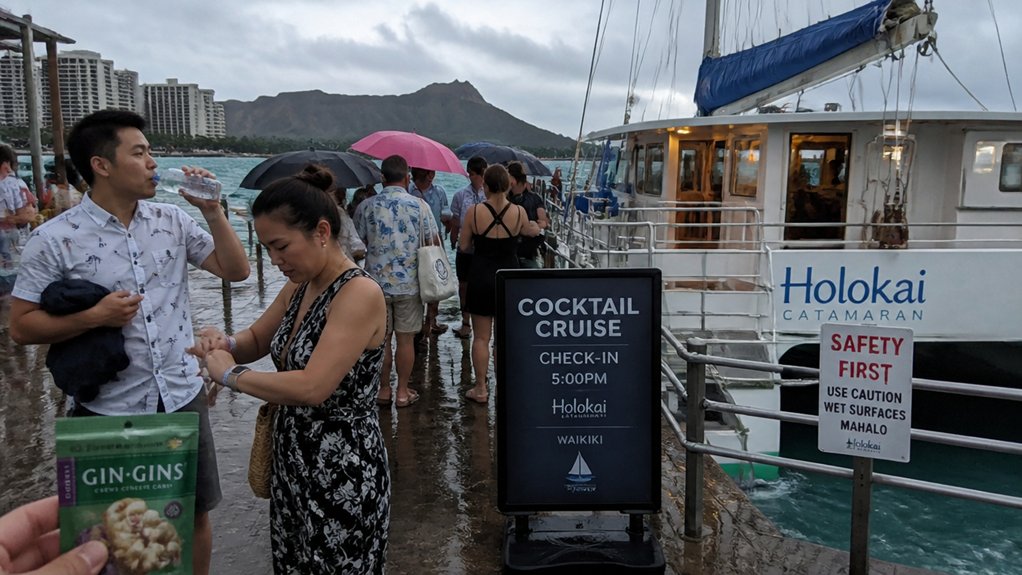
Preventing seasickness starts before you ever step onto the dock. If you’re prone to motion sickness, take an antihistamine like Dramamine 30 to 60 minutes before your cruise and follow the label. For stronger, longer protection, ask your doctor about a scopolamine patch behind your ear four to six hours ahead. Skip heavy, greasy food for two hours, drink water, and stick with crackers, toast, or ginger tea. Sea-Bands can help too, especially if you put them on before you feel woozy. Once aboard, choose a lower-deck seat mid-ship, face forward, and keep the horizon in view. On a catamaran, that spot usually feels calmest, so you can enjoy the rain, the waves, and your drink instead of studying the rail all night long. If the crew helps you stay comfortable through choppy weather, tipping etiquette on a Waikiki cocktail cruise is a thoughtful way to show appreciation.
When to Arrive and Check In
Even if the sky can’t make up its mind, get to the dock early and treat check-in like part of the cruise.
For a 2:00 PM departure, VIP and Early Check-In starts at 1:30, and general boarding begins at 1:45. Aim to arrive 30 to 40 minutes before boarding if rain looks likely. You’ll have time for ticketing, bag checks, restrooms, and a quick look at the canopy seats. If you’re with kids or get seasick, check in right away to claim a steadier mid-ship spot and ask the crew what the water feels like. Bring a printed or mobile ticket in a waterproof pouch, and call before you leave if a storm warning pops up there. Remember, the gate closes at 1:55 PM. If weather conditions raise concerns, review the refund policy before heading to the dock.
What Refunds and Reschedules Cover
If rain or maintenance cancels your Waikiki cocktail cruise, you’ll usually get a full refund, and if the weather turns sketchy right before departure, the crew will often offer you a new date instead. You can usually reschedule for free up to 24 hours before departure, while guest cancellations often need at least 48 hours’ notice for a full refund. Since ocean weather likes to keep things interesting, you should confirm the exact cutoff times at check-in and call the operator if a last-minute squall rolls in. These details are typically outlined in the operator’s cancellation policy before you book.
Weather Cancellation Coverage
While a little Waikiki rain might spot the deck and soften the sunset, refund and reschedule rules usually hinge on rough water, not drizzle. Light showers rarely cancel a cruise. High wind, heavy surf, big swell, or a Small Craft Advisory usually do. If the operator calls it off for unsafe boating or maintenance, you can usually choose a full refund or another date.
- Check messages before heading out.
- Call the check-in line for final status.
- Expect sea-state decisions, not cloud decisions.
- Bring curiosity and flexibility. Waikiki can hiss with rain yet stay safely sail-worthy.
That means you shouldn’t panic over mist on the rail or damp sandals. Listen for the captain’s go or no-go, then make your move with confidence before leaving home. Even for last-minute bookings, realistic expectations matter because weather calls can still change close to departure.
Free Reschedule Window
Rain decisions are one thing, but your booking clock matters just as much. You usually get a full refund if you cancel 48 hours ahead, and the free reschedule window stays open until 24 hours before departure. Light rain rarely stops sailing, so watch for rough seas, strong wind, or advisories instead. Cruise fares often reflect ticket inclusions like drinks, views, and onboard service, which makes rescheduling worth considering before giving up your spot.
| Timing | What you can do |
|---|---|
| 48+ hours before | Cancel for a full refund |
| 24 to 48 hours before | Call fast if forecasts worsen |
| Under 24 hours or operator cancels | Take a refund or complimentary rebooking |
Arrive on time, follow check-in steps, and keep the operator’s line handy. If weather turns dramatic, quick contact protects your options. That timing detail can save your sunset, your mai tai, and your patience onshore later tonight.
What to Do Instead if You Skip the Cruise
When the sky turns stubborn and the water looks more gray than glittering, skipping the cruise doesn’t mean giving up your Waikiki evening.
- Duck into the Waikiki Aquarium or Bishop Museum for one or two hours. You’ll get reef life, Hawaiian history, and dry shoes.
- If it’s Friday night, watch fireworks from shore or book a shorter sunrise sail later. Marginal weather often bothers brief trips less.
- Choose a covered sunset dinner cruise from Aloha Tower. The Pacific Star Buffet adds live music, bright plates, and rainproof views.
- Stay land based at Ward Village or Ala Moana Center, or try lei making, hula, or ukulele lessons. You’ll still hear island rhythms and leave with stories instead of soggy cocktails and windblown selfies on deck tonight.
Frequently Asked Questions
Are Waikiki Cocktail Cruises Adults-Only or Family-Friendly?
Waikiki cocktail cruises can be family-friendly or adults-only, so you’ll need to check each boat’s age policy. If you’re bringing kids, confirm duration, accessibility, cocktail etiquette, and whether music or sunset photography crowds suit them.
Is Parking Available Near the Departure Harbor?
Yes, you’ll find limited parking near the departure harbor, but you should arrive early. If the lot fills, skip valet parking, use nearby Ward lots, or book a rideshare and catch a shore shuttle there.
Are Drinks Included, or Do You Pay Onboard?
Yes, you’ll usually get one complimentary drink, just like you’d hope after boarding; after that, you pay onboard at the cash bar. You won’t typically find drink packages, and sodas or water usually cost extra too.
Are Rainy-Night Cruises Wheelchair Accessible?
Yes, you can often take a rainy-night cruise with wheelchair boarding and accessible seating, but you’ll need to confirm vessel-specific ramps, gate widths, restroom access, and boarding help beforehand, since rain doesn’t change mobility limitations.
Are There Restrooms Available on the Boat?
Yes, you’ll find onboard restrooms on these boats, usually freshwater facilities on the main cabin level. You should follow restroom etiquette, and if you need changing facilities, you’ll want to confirm details directly before booking.
Conclusion
Rain doesn’t automatically sink your Waikiki cocktail cruise. If the breeze stays tame and the harbor looks calm, you can still sip something cold under a canopy, watch gray clouds soften the skyline, and hear the hull hush across the water. But when wind rises, surf stacks up, or visibility turns murky, better safe than sorry. Check the operator’s update, arrive early, and keep a rain jacket handy. Then you’ll board with confidence, not guesswork.