You step onto a Waikiki cocktail cruise for sunset glow, a cold drink, and that clean trade-wind air, not a full whale chase. Still, in winter, you might catch a misty blow beyond Diamond Head or a dark back rolling between swells while the crew keeps the boat on course. That surprise is part of the fun. The real question is how often it happens, and what you should expect when it does.
Key Takeaways
- Waikiki cocktail cruises may spot humpbacks November through April, but sightings are incidental and far less reliable than dedicated morning whale-watch tours.
- Peak whale chances are January through March, though sunset departures prioritize drinks, skyline views, and golden-hour scenery over wildlife searching.
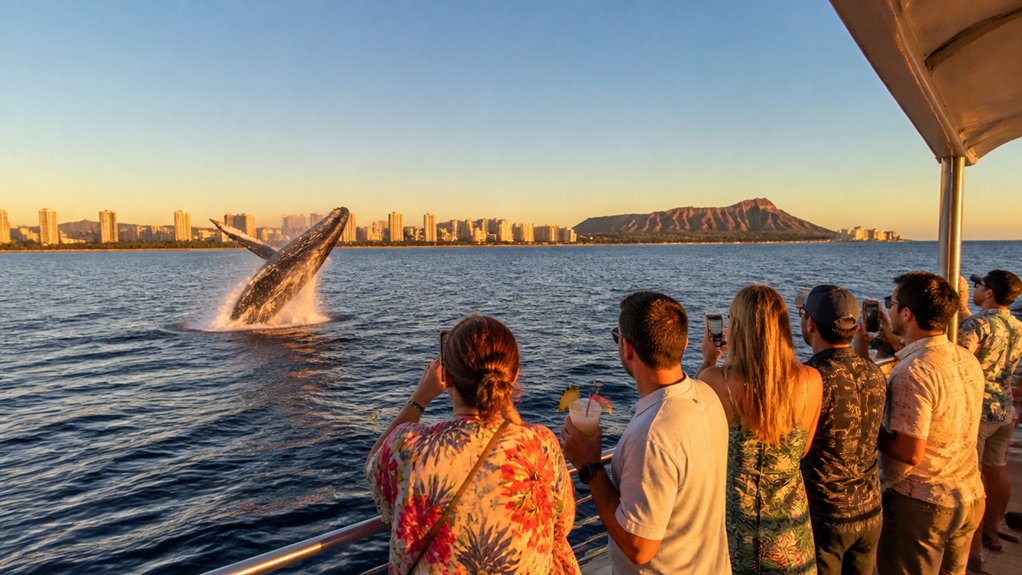
- If whales appear, expect distant blows, rolling backs, tail lifts, or occasional breaches rather than long, close-up viewing.
- Captains must stay at least 100 yards away and usually avoid chasing or lingering, especially near mothers with calves.
- For the best experience, bring a light jacket, arrive early for upper-deck rail space, and choose stable, Coast Guard-inspected boats.
Are Whales Common on Waikiki Cocktail Cruises?
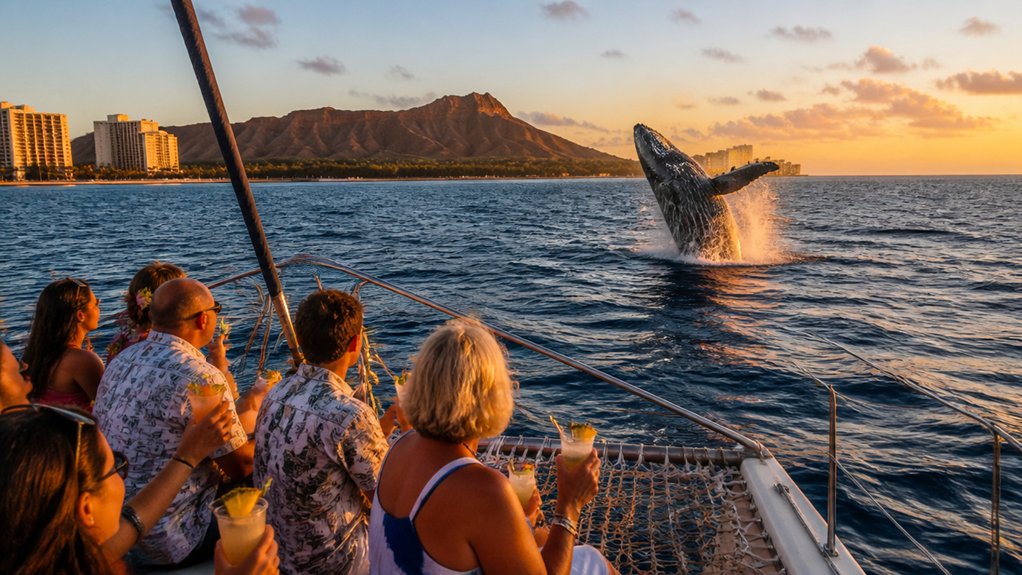
Sometimes, yes, you can spot whales from a Waikiki cocktail cruise, especially during humpback season from about November through April. Your best odds come between January and March, when a spout might rise beyond the gold water or a tail lift might flash near the horizon. On a Waikiki Sunset Cruise, sightings usually feel like exciting cameos, not a full wildlife show. You may hear passengers point, glasses clink, and crew call out a distant breach before the boat continues along. Most cocktail catamarans keep a relaxed social setup, so they won’t usually circle for long looks. Crews also follow safety rules and keep respectful distance, especially around mothers and calves. In Hawaiian waters, boaters are also advised to maintain a 100-yard distance from humpback whales for safe and legal viewing. If whales top your list, book a Waikiki whale watching cruise too first.
Why Sunset Cruises Are Not Whale Watches
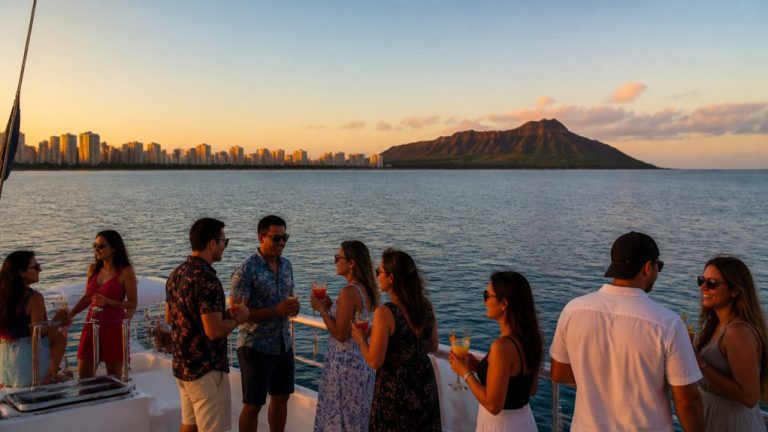
You might spot a humpback from a Waikiki sunset cruise, but that doesn’t make the trip a whale watch. Sunset cocktail sails are built around golden-hour glow, drinks, and skyline views. You follow a scenic route on a set schedule, not a wildlife search plan. If a whale appears, the boat usually won’t chase it or linger long.
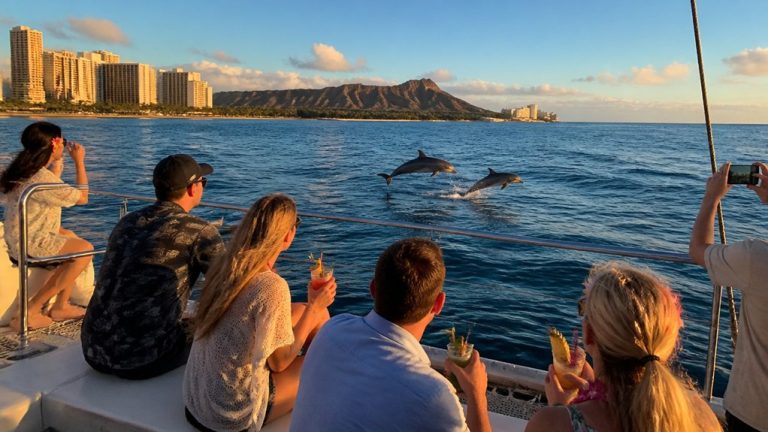
You may also occasionally spot dolphins on Waikiki cocktail cruises, but those sightings are still a bonus rather than the focus of the trip. Those trips slow down, change course, and often include naturalist commentary and spotting gear. Sunset departures also happen later, when sightings are generally less likely than on morning runs. If whales top your wish list, book a morning or guaranteed whale-watching cruise instead of hoping your mai tai comes with a breach nearby tonight by pure island luck.
When Do Waikiki Cocktail Cruises See Whales Most?
Most often, Waikiki cocktail cruises see humpbacks during Hawaii’s winter whale season, with the best odds from January through March. You can still get shoulder season luck in November, December, and April, but winter is your sweet spot. If you want stronger odds, choose a morning departure between about 8 and 11 a.m. Calmer water often helps, and dedicated Whale Watching trips usually run then for good reason. Evening cocktail sails in winter can still deliver a memorable Waikiki Whale moment, yet the chances drop compared with daytime tours. If your stay is short, book your cruise early in the trip. That gives you room to reschedule if weather or choppy seas cut visibility. Think of timing as your secret weapon, not luck alone. For both whale sightings and smoother conditions, the best time of year to book a Waikiki cocktail cruise is typically during Hawaii’s winter months.
What Do Whale Sightings Look Like Onboard?
Often, the first clue isn’t the whale itself but a tall, misty blow rising off the water like a quick puff of smoke. On Waikiki whale watching cruises, you usually spot that spout first, then a smooth black back rolling up through the chop. If the whale dives deep, you may catch a tail lift, or fluking, before it slips under.
Some whale sightings stay subtle and cinematic. Others turn loud fast. A breach or tail slap sends up spray, sparks cheers, and lands with a boom you feel through the deck. Crew members call directions and distance, and you shift spots as whales surface nearby, then pop up off minutes later. In Hawaii, boats are required to keep a 100-yard distance from humpback whales, so sightings should feel exciting without crowding the animals. When calves appear, expect scenes like rolling, nursing, and pectoral fin waves.
Still comparing Waikiki Sunset Cruise?
Ask for tour ideas, hotel suggestions, or a simple trip plan that combines both.
Trip Helper
How Crews View Whales Responsibly
You’ll notice the crew sets up calm, steady viewing so you can watch the action without the boat lurching or rushing the whales. They keep a respectful buffer, follow Hawaii’s 100-yard limit, and guide everyone to spread out for balanced views instead of a rail-side pileup. If a calf appears, you’ll feel the mood shift fast as the captain slows down, keeps extra distance, and lets the little family have the right of way. Federal law prohibits boats, kayaks, drones, swimmers, and other vessels from approaching within 100 yards of humpback whales in Hawaiʻi.
Steady Viewing Practices
Watching well starts with restraint. On a Waikiki cocktail cruise, you notice how good Whale watching depends on calm boat work. Your captain holds legal distances, keeps the vessel steady, and uses stabilization so the deck feels less rolly and your camera quits wobbling. Crew call directions and distances so you spread out instead of piling onto one rail. If light rain moves through, crews may continue under safe conditions, much like a rainy cruise that still runs when seas and visibility stay manageable.
| Practice | What you notice |
|---|---|
| Steady handling | Smoother views and safer footing |
| Calm guidance | Less crowding, clearer photos |
If calves appear, you’ll feel the mood shift softer. Speed drops. Turns stay gentle. The boat may drift or track parallel, never chase. That quiet rhythm lets you hear the water slap the hull and actually watch, not scramble while a crew member shares simple photo tips nearby.
Respecting Whale Space
That same calm handling comes from a simple rule on good Waikiki cocktail cruises: give whales room and let them choose the moment. You’ll notice the captain stay outside Hawaii’s 100 yard buffer while trained lookouts scan the water and binoculars pick up blows, fins, and tail lifts.
For you, respecting whale space means listening to quick deck instructions, keeping movements easy, and speaking a little softer than usual. Crews follow a no chase, no crowding approach, so if whales change direction, the boat holds steady or eases back. Passengers may be guided to both rails for better sightlines without pushing closer. That patience is part of the thrill. You’re watching majestic humpback whales on their terms, which makes every spout and fluke feel bigger. After heavy rain, some crews also keep an eye on Brown Water Advisory conditions, since runoff can affect nearshore waters even when the beach itself seems calm.
Calf-Safe Observation
When a calf appears beside its mother, the whole mood on deck gets quieter and more focused. You notice the captain ease back speed and keep a steady course. Crews stay at least 100 yards from humpback whales and leave even more room for mothers with calves. That calf-safe observation helps you watch natural behavior unfold without pressure. If the pair tail-slap repeatedly, turn fast, or make long shallow dives, the crew backs off. You also hear calm reminders about viewing sides, phones on straps, and no drones or chasing. By spreading passengers out, the boat stays balanced and the scene feels hushed, respectful, and quietly thrilling for everyone onboard tonight beneath Waikiki’s soft sunset glow and salt breeze against your cheeks at dusk. Before departure, many operators also review life jacket wear so passengers know where safety gear is and why keeping it readily accessible matters if conditions change.
What the Ride Feels Like Off Waikiki
Settle in and the ride off Waikiki feels smoother than many first-timers expect, especially on Coast Guard-inspected double-decker boats and stabilized options like Lokahi’s SeaKeeper-equipped vessel, which helps cut the roll that can trigger seasickness. Early evening usually brings gentler water than late afternoon, so you can sip, scan, and settle into the rhythm instead of bracing for every bump. A Sunset Whale cruise also stays fairly short, about two to two and a half hours, which keeps the outing easygoing. You’ll still notice wind in your hair and occasional spray on your arms, so bring a light jacket. Crews keep things calm with clear safety briefings and thoughtful viewing direction, letting everyone move around without that classic one-side shuffle when whales surface nearby. Reviews of Waikiki cocktail cruises often note that conditions feel manageable for most guests, with the route and vessel design helping keep the experience comfortable.
Where to Sit for Views and Photos
For the cleanest views and strongest photo angles, you’ll usually want the shaded side of the upper deck, where the horizon opens wide and the sun won’t wash out your shots. If the crew points the boat toward a whale cue, move toward the bow rail for that exciting heads-up look and a better chance at catching a tail or breach with water in the foreground. You’ll also want to stay flexible when they call for people to shift port or starboard, because a small move can turn a crowded rail into your best frame of the trip. On many sailings, the best seats are on the upper deck, where you get broader Waikiki views and cleaner sightlines for both whale watching and skyline photos.
Best Side Seating
If you want the cleanest views and your best whale photos, grab a spot on the windward rail, which is usually the side facing open ocean and Diamond Head.
- Arrive early and claim a bow seat, so you can see whales surface ahead before crowds gather.
- Pick the upper deck or shaded top level for wider views, especially on larger boats with raised viewing areas.
- If roll bothers you, sit midship near the stabilization zone for a steadier ride until you head back.
Keep shoulder-height space clear, don’t lean over the rail, and follow crew calls when it’s time to switch sides. You’ll get safer sightlines, better light at golden hour, and fewer elbows in your frame when the ocean starts tossing cocktail chatter. Before choosing your seat, it also helps to confirm departure point details, since Waikiki cocktail cruises can board from different locations and that affects how early you should arrive.
Photo Angles On Deck
Once you’ve claimed a good side, think about the angle your camera will see, not just the seat your body wants. On a boat ride near Waikiki Turtle Canyon, try the windward rail for clean sightlines. Wear polarized sunglasses to cut glare. For skyline drama, head to the stern. Near sunset, switch to low light settings early so whale shots stay sharp as the sky dims.
| Spot | Best frame | Mood |
|---|---|---|
| Windward rail | Spouts, tails, blue water | Crisp, open |
| Stern | Wake, horizon, Diamond Head | Cinematic, bold |
| Midship shade | Smooth video, steady hands | Calm, easy |
When the crew calls a side, move there for tail lifts or pectoral waves. They rotate people, so you won’t play elbows with strangers. Sit midship on stabilized boats for steadier clips. Use burst mode and a wrist tether. Stay ready. Whales surface close, then vanish, then surprise you.
What to Bring on a Waikiki Cocktail Cruise
Because the trade winds can feel cool after sunset, it’s smart to pack for both warm sun and a breezy ride back to shore. Bring sunglasses, a hat, and reef-safe sunscreen so you’re covered from glare and spray. A light jacket helps once the sky turns peach and the ocean air sharpens. If you’re hoping to see turtles, sunset colors, or sudden whale activity, protect your phone or camera with a strap or dry pouch.
- Take motion-sickness meds before boarding.
- Bring a refillable water bottle and sip often.
- Leave drones, glass bottles, and bulky beach bags at your hotel.
Small onboard storage usually fits the essentials, and your hands stay free for photos, drinks, and that salty, golden-hour hush at sea. For Waikiki cocktail cruises, packing light makes it easier to settle in and enjoy the views without juggling extra gear.
Which Waikiki Cruises Are Most Comfortable
If you want the smoothest ride, look for boats built for stability, like Living Ocean Tours’ double-decker vessels with SeaKeeper stabilization that helps cut the roll while you watch for spouts off Waikiki. You’ll also feel the difference when you can slip into shaded seating, and operators like Pink Sails Waikiki add sheltered indoor spots with cushioned benches that give you a break from the glare. Pick a morning departure if you can, because calmer water and a comfortable seat can make your whale watch feel a lot less like a balancing act. For steadier viewing and video, keep your body low and use three points of contact whenever the boat shifts.
Stable Boat Features
Often, the most comfortable Waikiki cocktail cruises come down to one simple thing: how steady the boat feels once you leave the harbor. On a cruise off Waikiki Beach, you’ll notice comfort fast when a Coast Guard-inspected double-decker uses SeaKeeper stabilization to cut roll and keep your drink, and stomach, happier. Many Ala Wai Harbor cocktail cruises also benefit from a more protected departure area before heading into open water.
- Pick smaller passenger counts, because you’ll have room to move and better whale views.
- Choose crews that direct sightlines and distances, so nobody rushes one rail and tips the mood.
- Book calmer windows, since morning seas often feel smoother than some sunset sailings.
You’ll also appreciate onboard restrooms, dry storage for small items, and an eco-first crew that handles the boat steadily, explains safety clearly, and keeps first-time riders relaxed aboard.
Shaded Seating Options
For long, bright runs off Waikiki, shaded seating can make the whole cruise feel easier on your eyes, your skin, and your mood. You’ll want boats that clearly list shaded seating, sheltered indoor cabins, or covered upper decks, especially on larger Majestic-style cruises. Operators like Living Ocean Tours use custom-built, Coast Guard-inspected double-deckers with cushioned benches, so you can settle in and still see whales without squinting through the glare. If you get queasy, look for SeaKeeper stabilization on some Lokahi boats to calm the roll while you sit. Check for restrooms and dry storage near the shade. Keep in mind that hotel pickup may not be included with Waikiki cocktail cruises, so comfort planning should also include how you will get to the departure point. Then arrive early and ask for your preference at check-in, because the best rail and window spots disappear fast on popular morning and sunset departures daily.
When to Book a Whale Watch Instead
Usually, you’ll want to book a dedicated whale watch instead of counting on a Waikiki cocktail cruise once peak season hits from January through March. If you’re visiting in winter, sunset sails chase mood, not migration, so the whole boat may stay focused on mai tais while whales pass in the distance.
- Choose a morning departure, like 8am or 10am, for calmer water and steadier views.
- Look for a Coast Guard-inspected boat with an experienced crew and responsible viewing rules.
- Favor operators with guaranteed sightings, return trips, or refunds if weather turns.
This route gives you your best shot at blows, tail slaps, and a sudden hush when everyone spots a breach instead of another round of cocktails on a glowing blue Pacific morning. On some evening sails, unlimited sipping can further shift attention away from whale activity and toward the bar experience.
How to Book a Waikiki Cruise Smartly
If you want the best mix of easy logistics and a real shot at whale sightings, book your Waikiki cruise early and aim for the front half of your trip. The best time to go is during whale season (January through March), and an early booking gives you room to reschedule if weather spoils a late-March sail. In general, the best time to book a Waikiki cocktail cruise is as soon as your travel dates are set, especially if you want the widest choice of departures during peak whale season.
Pick a departure that matches your sea legs. Morning cruises from 8:00 to 10:30 are usually calmer. Sunset trips around 5:00 chase color more than wildlife. Check check-in rules, since some crews want you there 15 minutes early, and Kewalo Basin parking can crawl on weekends. Choose a Coast Guard-inspected stabilized boat, ask about whale guarantees, and pack sunscreen, water, meds, and a phone strap as well.
Frequently Asked Questions
Are Drinks Included on Waikiki Cocktail Cruises?
No, you usually don’t get drinks included on Waikiki cocktail cruises unless you book drink packages or premium fares. You’ll often find cash bars onboard, so check booking details for ID rules and restrictions first.
Are Waikiki Cocktail Cruises Suitable for Children?
Yes, like finding Neverland at sea, you’ll find Waikiki cocktail cruises suit children if you check child fare, age rules, restrooms, and seating. You should choose calmer, shorter trips and prioritize family activities over nightlife-focused departures.
Do Waikiki Cocktail Cruises Have Restrooms Onboard?
Yes, you’ll usually find restrooms onboard Waikiki cocktail cruises. You can expect onboard facilities like marine heads, with restroom locations often below deck or inside sheltered cabins; for smaller boats, you should check ahead first.
Can I Bring My Own Food or Drinks?
Yes, it’s a million times smarter to check first: some operators let you bring picnic baskets and nonalcoholic options, while others restrict food or drinks. You’ll want compact, non-glass items and should confirm rules at check-in.
Are Waikiki Cocktail Cruises Wheelchair Accessible?
Sometimes, but you’ll need to check each operator. Many Waikiki cocktail cruises use boats without wheelchair ramps or accessible seating, while some larger vessels do. Ask about boarding assistance, restrooms, and dock access before booking.
Conclusion
On a Waikiki cocktail cruise, you’re chasing sunset first and whales second. If a humpback appears, it can feel as huge as a moving island, with a silver blow hanging over the water and a dark back rolling through pink light. If not, you still get soft evening seas, clinking glasses, and Diamond Head glowing like a postcard. Arrive early, grab a good seat, zip up a light jacket, and treat any whale cameo like a bonus scene.