Just as the swell lines up with the horizon, you realize smooth boat video starts before you hit record. You keep the camera light, go wide, and let stabilization do some quiet work while your knees absorb the deck’s bounce and the salt air hisses past the rail. Clamp what you can, keep your framing simple, and suddenly the motion looks intentional. The trick that changes everything comes next.
Key Takeaways
- Keep your camera rig light and stripped down so you can react quickly, swap shoulders fast, and reduce fatigue on moving decks.
- Shoot wide to medium focal lengths with stabilization, because wider lenses hide roll better and make framing more forgiving in chop.
- Match natural motion by using about 1/50 shutter at 25fps and ND filters to control exposure in bright daylight.
- Brace your body or clamp the camera to solid boat hardware so the camera moves with the vessel instead of against it.
- Safety-tether all gear, protect it from spray, and test mounts in real chop before shooting to avoid damage and unstable footage.
Pick a Light Camera for Boat Video
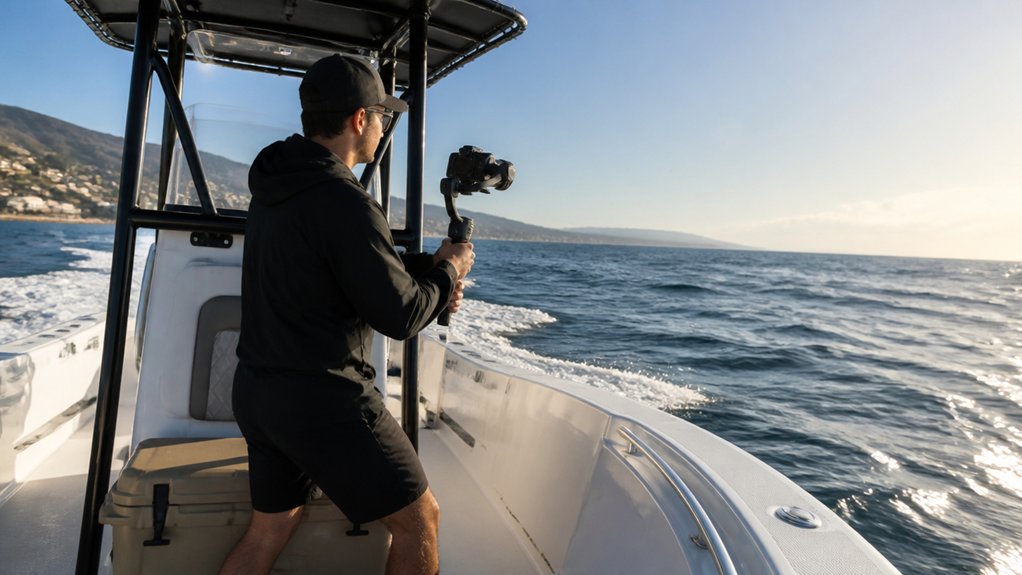
Often, the smoothest boat video starts with a camera that doesn’t feel like an anchor. On deck, every pound matters. You’ll brace faster and shoot longer with a smaller body like a Canon 5D Mk IV or C100 instead of a bulkier cinema rig. The boat shifts. Your stance shifts. A lighter setup lets you react without wrestling your gear.
Strip it down before you cast off. Skip the battery belt, matte box, and heavy shoulder rig unless the job truly needs them. You want to keep the camera nimble so you can shoulder it quickly or switch sides when the hull slaps a wave. Need more reach? Use a cropped 4K mode instead of packing a giant telephoto. Your back will notice, and your footage usually will too. If you switch to a phone for quick coverage, dial in sunset cruise photos settings ahead of time so exposure stays consistent as the light drops.
Use Wide, Stabilized Lenses on Boats
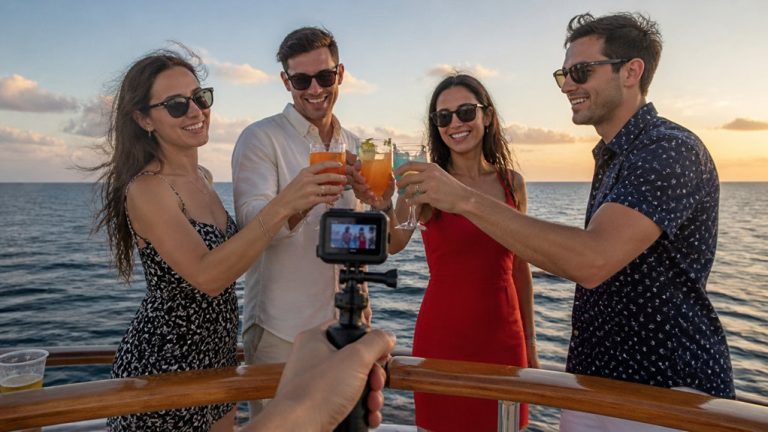
On a small boat, you’ll get smoother footage if you stay wide, because a broader view makes the horizon’s swing look calmer and keeps one-handed framing from turning into a circus act. You’ll also want lens stabilization, since IS or VR can soften the little jolts and rolls that sneak in when you don’t have a gimbal. If you need more reach, you can crop 4K instead of jumping to a long lens, then pair that setup with a light rig and a rain cover when the salt spray starts flying. For action-focused outings, GoPro tips can help you capture steadier cruise footage in tight spaces.
Wider Angles, Less Motion
Usually, the easiest way to make boat footage feel calmer is to go wider than you think you need. A wide angle lens in the 16 to 50mm APS-C range makes roll and pitch look smaller, and it gives you breathing room when the deck shifts under your shoes. Keep your shutter near 1/50 at 25fps with ND, so motion stays natural. On choppy water, that extra width also lets you swap shoulders fast, keep horizons, and stay nimble during close boat-to-boat passes. If your body is fighting seasickness, it gets much harder to hold horizons level and move smoothly on deck.
| Lens | Why it helps | Best use |
|---|---|---|
| 16–24mm | Softens sway | Deck scenes |
| 24–35mm | Forgiving framing | Interviews |
| 35–50mm | Natural feel | Details |
If you need more reach, crop 4K first. Save 135mm and longer for solid mounts, unless you enjoy wrestling the horizon.
Lens Stabilization Matters
Choose a lens with stabilization, and the boat suddenly feels a little less wild in your hands. A stabilized (IS/OSS/VR) zoom cuts the jitter from surge and roll, especially in the sweet in-boat ranges of 17–55mm and 24–70mm. Go wide when you can. A 16–35mm or 24–70mm hides small bumps, lets you shoot one-handed, and makes shoulder swaps quicker on a rocking deck.
If you’re filming during golden hour or after sunset, low light conditions make stabilization even more important on the water. Skip long primes past about 135mm from a chase boat unless you have a gimbal, gyro head, or very fast shutter speeds. Telephoto shake gets ugly fast out there. Pair lens IS with camera stabilization and shoot 4K, so you can smooth clips in post and reframe later. Keep the rig light too. Your arms, and your footage, will thank you.
Still comparing How To Film Smooth Video On A Boat?
Ask for tour ideas, hotel suggestions, or a simple trip plan that combines both.
Trip Helper
Stabilize Boat Video With Simple Rigs
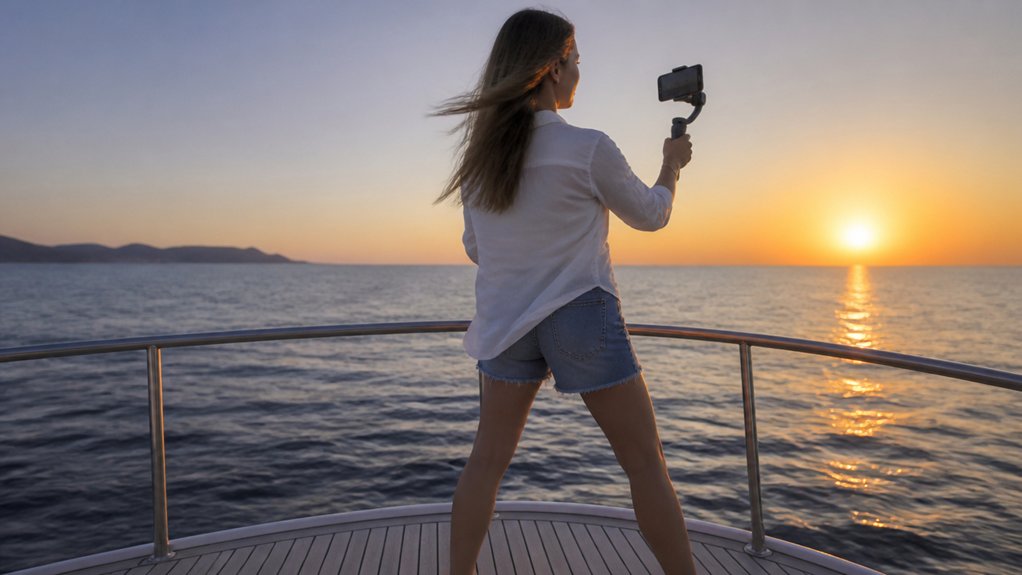
You can smooth out a rocking deck by turning your body into a human gimbal with a light camera, a stripped-down shoulder rig, or a small handheld stabilizer that won’t wear you out by noon. When the boat allows it, you’ll get even cleaner shots by clamping the camera to the rail or deck with a secure mount so the hull and lens move together through the slap of waves and engine hum. While filming marine life, keep a 50-yard distance from dolphins and small whales to avoid disturbing protected animals. Test both setups in real chop, keep the rig simple, and you’ll spend less time wrestling gear and more time catching that bright, rolling horizon.
Handheld Human Gimbal
Lean into the boat’s motion instead of fighting it, and your own body can become a surprisingly smooth gimbal. Use a body harness with chest and waist tie-off points so your torso stays steady while your arms float. Quick-release clips would go on the harness, not the camera. Add a small 1 to 3 kg weight to a shoulder ring to calm sharp chop.
- Stand feet shoulder-width apart with bent knees.
- Practice one-handed shooting with a wrist strap.
- Use a 300 to 600 g counterbalanced handle and switch shoulders fast.
- Shoot wide to medium, 16 to 50 mm equivalent, with IS or in-body stabilization.
Wear a life jacket while filming underway, since sudden motion can leave no time to reach stowed flotation. Rehearse on the actual boat for an hour or two. Tune tension, weight, and horizon before the real take day.
Fixed Mounts Afloat
Deck-cleat mounts can turn a jumpy boat into a steady little camera platform if you tie everything to the boat itself. Clamp a tripod or high-hat to a cleat or rail with a suction cup or deck plate made for boats. Then safety-tether every piece, because waves love loose gear.
You can also rig a tiny sled or deck dolly. Tape rubber mat under the track, add cribbing wedges, and secure them so nothing rolls downhill when the bow lifts. Protect gelcoat with foam or rubber, and bolt or tie mounts to structure, not sandbags. For more coverage, plant small 4K cameras at the bow and stern, then pan in post. If you want a smoother handheld feel, test a gyro head like Perfect Horizon first. Small boats can be quirky. If you’re filming before boarding in Waikiki, planning Waikiki cruise parking ahead can make loading gear onto the boat much easier.
Mount Cameras to the Boat When Possible
A boat’s own bones can steady your shot better than a tired pair of arms, so mount the camera to the vessel whenever you can. For boat to boat work, lock cameras to rails or deck points with clamping tripods, suction cups, or fiberglass-safe mounts. When room gets tight, plant several small 4K cameras around the boat. You’ll gain fresh angles and cleaner post pans without handheld wobble.
- Clamp to rails, cleats, or solid deck hardware.
- Pad mounts with rubber or cribbing to protect gel coat.
- Lash high-hats, sleds, and apple boxes down. Sandbags alone can slide.
- Use a light jib or gyro head at the bow carefully. Heavy arms turn sketchy fast.
Check every tie twice. Salt, spray, and vibration love loose gear. Before rigging, confirm local office status on the Calendar of Events, since harbor office closures and modified hours can affect launch-day access.
Frame Shots to Hide Boat Motion
Start by widening out and letting the boat stay in the picture. A 16 to 35mm view would calm sudden surge and roll because the horizon and foreground drift less in frame. Brace yourself to the rail or wear a shoulder harness so your camera shares the boat’s rhythm. On a Waikiki cocktail cruise, choosing best seats with open sightlines can make it easier to hold steady compositions while keeping the shoreline in view.
| What you frame | What viewers feel |
|---|---|
| Rail and deck lines | Steady purpose |
| Rigging and bow shapes | Intentional motion |
| Breathing room around faces | Easy, natural drift |
| Tighter boat-to-boat crops | Close energy, less wobble |
Use lead lines to guide the eye, then leave a little headroom and lead space so subjects can wander with the rocking. If you shoot another boat, move closer and crop 4K or use modest telephoto reach, not extreme glass on choppy days.
Protect Yourself and Your Gear at Sea
Good framing helps the motion feel graceful, but your next job is making sure nobody and nothing goes skidding across a wet deck. Wear a Coast Guard approved lifejacket and a light helmet with reflective tape and your blood group marked clearly. On longer shoots, confirm whether the vessel has restroom facilities so crew can stay comfortable without interrupting filming.
- Tether tripods, high-hats, and dollies to strong structure with webbing or stout lines.
- Tape down rubber matting and cribbing. Sandbags alone won’t stop a slick slide.
- Use a body harness with hip tie-offs, and let a crewmate tail your safety line.
- Wrap cameras in clear plastic, add rain covers and UV filters, and pack seasickness meds, knee pads, a chamois, fresh water spray, and a basic first-aid kit for salty mornings and sudden knocks at sea all day.
Use Drone Shots Safely From Boats
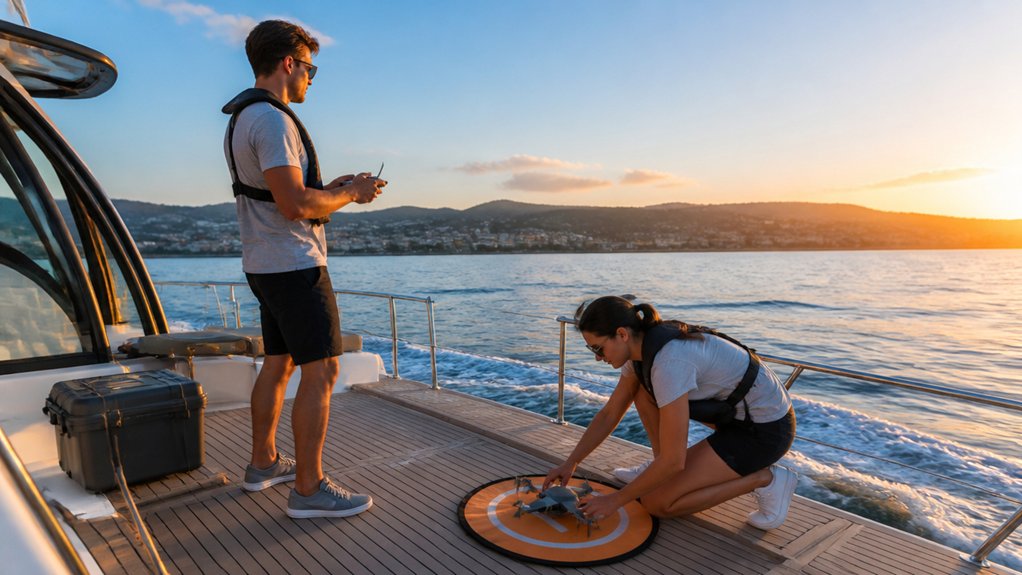
Flying a drone from a boat can give you those silky pullbacks and bright overheads, but the deck below is moving the whole time, so you can’t treat it like a dock. Keep your home point updated as the boat moves, or return-to-home might zip off to old water. Pick a small, folding-prop drone, and practice hand-catch recovery at a reachable hover. Grab the body, not the legs, then cut power. Skip launches on pitching decks when you can, and use chase boats or calm water for safer landings. Check compass and IMU on stable ground because boat motion can confuse startup. Assign a gloved retriever, agree on commands, and rehearse battery failsafes, fly-aways, and water recovery before each flight. Trust me, propellers bite. If you’re filming a Waikiki cocktail cruise in rainy weather, rescheduling can be smarter than forcing a drone launch from a slick, unstable deck.
Frequently Asked Questions
How Do I Record Clear Audio Over Engine and Wind Noise?
You’ll get clear audio by using a Windproof Microphone close to your subject, adding a protected lav, recording separate tracks on a dedicated recorder, cutting low rumble, monitoring with headphones, and cleaning noise in post.
What Camera Settings Work Best for Sunrise or Sunset Boat Filming?
Like chasing a melting coin on water, you’ll use Golden Hour settings: shoot 24–30fps, keep shutter double, lock manual exposure and white balance, stay near native ISO, add ND, and expose right without clipping highlights.
How Can I Avoid Seasickness While Filming for Long Periods?
You’ll prevent seasickness by taking meclizine beforehand, staying hydrated, eating light carbs, avoiding alcohol, bracing mid-ship, watching the horizon, using a scopolamine patch if needed, and packing Ginger remedies, wristbands, plus fresh-air breaks often too.
How Many Batteries Should I Bring for a Full Day on Water?
You should bring at least three times your normal batteries: one in-camera, one charging, one spare. Battery count rises with runtime and accessories, so for two cameras, pack six, plus a battery and power bank.
Do I Need Permits to Film Commercially From a Boat?
Yes, you often do need permits to film commercially from a boat. You should check federal, state, and local jurisdiction, secure Harbor permits, marina permission, insurance, and FAA approvals early before shooting for your location.
Conclusion
Out on the water, the difference shows up a second before the wave hits. Your rig stays light. Your lens stays wide. The horizon rolls, but your shot holds, clean and calm, while spray taps the rails and the engine hums below your feet. Then the boat turns. You shift shoulders, check your tether, and keep filming. When you watch the clip back, it feels less like survival and more like a scene worth chasing.