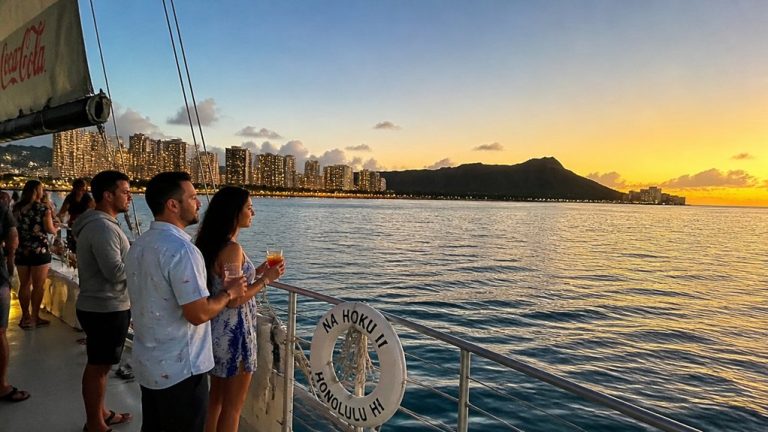

A cocktail cruise sounds easy until the deck starts a slow side-to-side sway and your spritz suddenly feels like a bad idea. You can stack the odds in your favor before you even step aboard. Where you stand matters. So does what you sip, when you take ginger or meds, and how fast you catch that first warm wave of nausea. A few small moves can keep the skyline sharp and your stomach calm.
Key Takeaways
- Eat lightly, hydrate well, and limit alcohol before and during the cocktail cruise, since dehydration and drinks can worsen nausea.
- Take meclizine or dimenhydrinate before boarding, or apply a scopolamine patch at least four hours before departure.
- Stay midship on a lower deck, where the boat moves less than the bow, stern, or upper decks.
- Look at the horizon, get fresh air, and face forward if you start feeling sweaty, yawny, pale, or mildly nauseated.
- Avoid reading your phone or staring at close-up screens, and use ginger or Sea-Bands for added relief.
Why Cruise Seasickness Happens

Although a cocktail cruise sounds smooth in theory, your body can read it very differently once the boat starts to roll. Seasickness starts when your vestibular system and your eyes disagree about motion. Deep in your inner ear, fluid shifts through semicircular canals to track head turns, while the saccule and utricle read gravity and straight line movement. If you’re below deck, your drink may look steady even as the floor tilts and hums under your shoes. Your brain gets mixed messages, and nausea can swoop in fast. Anxiety can pour fuel on that confusion, too. That’s why a fixed horizon, cool salt air, and a calmer spot midship on a lower deck often help your senses sync up again before dinner hits hard. Reviews of Waikiki cruises often mention that choppy seas can make the ride feel bumpier than first-time guests expect.
Who Gets Seasick Most Easily
That sensory mismatch doesn’t hit everyone the same way, and some passengers feel the wobble sooner than others. You may notice it most in kids ages two to twelve, who often turn pale fast when the deck hums and the horizon tilts. Women also face higher odds of getting seasick, especially during pregnancy, hormonal shifts, or certain points in the menstrual cycle. If migraines run in your family, or you’ve had them yourself, motion can stir up nausea and vertigo more easily. Your mindset matters too. If you board tense, worried, or already convinced the boat will win, your body adapts more slowly. And if cars, buses, or spinning rides already unsettle you, a cocktail cruise may do the same before dessert even arrives. While planning ahead, choose reef-safe sun protection so you can stay comfortable on deck while helping reduce harm to marine life.
Prevent Seasickness Before You Board
Stack the deck in your favor before you ever step onto the gangway. Smart prevention feels almost invisible, like choosing calm water before the first swell. You’ll board feeling steadier and more curious, ready for salty wind, clinking glasses, and that first view of the skyline slipping behind the stern at dusk tonight with confidence intact. If your cruise includes a swim stop, choose lifeguarded beaches whenever possible and stay aware of changing ocean conditions.
- Start pre-dosing with meclizine or dimenhydrinate 24 to 48 hours ahead.
- Put a scopolamine patch behind one ear at least 4 hours before departure.
- Drink plenty of water for two days, and skip pre-boarding alcohol and heavy caffeine.
- Pack Sea-Bands for the P6 point, plus ginger gum, candies, or supplements.
- Book midship on a low deck, then get real sleep before the harbor lights sparkle.
Catch Seasickness Early
You’ll have a much better shot at staying steady if you catch seasickness in its first quiet moments, when extra saliva, a cold sweat, a few big yawns, or a faint wobble start to creep in. As soon as you notice those early hints, look at the horizon, get fresh air, sip water, and reach for a fast-acting fix like ginger, a Sea-Band, or a remedy you already know agrees with you. Move to midship or lie down facing forward before the room starts doing its little boat-party spin. Let the boat operator know too, since operator responsibility includes helping passengers stay safe and respond early to problems on board.
Still comparing Seasickness Tips For Cocktail Cruises?
Ask for tour ideas, hotel suggestions, or a simple trip plan that combines both.
Trip Helper
Recognize First Symptoms
Before the boat really gets to you, your body usually sends a few quiet signals. Motion sickness rarely starts with drama. You might feel mildly nauseous, extra saliva pooling, or a cool sweat on your neck. Maybe smells turn sharp, your breathing gets quick, or you keep yawning like the ocean scheduled nap time. If reading suddenly feels impossible, or you can’t stop seeking the horizon, pay attention.
- Notice pallor, chills, or lightheaded wobbles.
- Watch for drowsiness or weird apathy.
- Trust sudden odor aversions around drinks or snacks.
- Step outside and lock your gaze on the horizon.
- Sip water or ginger early, before symptoms build.
Spotting these clues in the first hours gives you a real advantage. Your body whispers before it complains loudly. If you’re on a Waikiki cruise where the age limit affects who can join the cocktail service, tell your group early if you feel off so you can move to fresh air before symptoms escalate.
Medicate Before Escalation
Once those early hints show up, timing matters more than toughness. Before you board, start a preventative oral antihistamine such as meclizine or dimenhydrinate one to two hours ahead, or earlier if the label or your physician says so. These meds work best when they’re already in your system. For steadier coverage, place a scopolamine patch behind one ear at least four hours before sailing. It can quietly guard you for up to seventy-two hours, which suits a short cocktail cruise nicely. If you skip drugs, wear Sea-Bands on the P6 point before departure and check placement every few hours. Ask your physician about interactions, pregnancy, glaucoma, or urinary retention, and pack backup options too. Also, check your cruise policy on bringing your own alcohol before boarding, since Waikiki operators may have specific rules. Then harbor lights feel charming, not ominous, as music plays.
Act At First Signs
When the first flutter of queasiness shows up, treat it like a yellow light, not a dare. Sea sickness usually gets louder if you wait, so act while the deck still feels only slightly off.
- Sip water or coconut water to curb dehydration and nausea.
- Head midship on a lower deck. Find fresh air and lock on the horizon.
- Chew ginger gum or candy. Add a Sea-Band at the P6 point.
- Take slow deep breaths. They steady your nerves and your stomach.
- If symptoms grow, see the ship’s medical team fast. Early meds work better.
If rough water is likely, a scopolamine patch needs four hours. Dramamine or Bonine works best the evening before, or one to two days early before boarding the ship. If you step outside for air, keep a respectful distance from marine life and follow viewing distances for whales, dolphins, monk seals, and sea turtles.
Choose the Least Rocky Spot Onboard
Think of the ship as a seesaw and claim the sweet spot right near its middle. On a cocktail cruise, your best move is to stay midship and low, close to the waterline, where the ship rolls and pitches the least. If you’re booking a cabin, choose a lower deck stateroom near the centerline. Skip the bow, stern, and lofty open decks when the water turns bumpy, since those spots exaggerate every dip and sway.
You can also stack the odds in your favor before boarding. Pick a modern ship with active stabilizers, because they smooth out motion far better than many smaller, older vessels. The result feels simple but glorious: less wobble in your glass, steadier footing, and a happier stomach all around. These tips can be especially helpful when planning Ala Wai Harbor cocktail cruises, where choosing the right onboard spot can make the ride much more comfortable.
Watch the Horizon and Get Fresh Air
A steady spot onboard gives you a head start, and your next move is just as simple: get your eyes on the horizon and your face into some fresh air. When you watch the horizon, your eyes hand your brain a steady reference, and that can calm queasiness fast. Head for open deck space, ideally midship on a lower deck, where the ship’s motion feels smaller and easier to read. On a Waikiki cocktail cruise, sunset views and open ocean scenery can make focusing on the horizon even easier.
Find a steady spot, watch the horizon, and let fresh air help your body settle with the ship’s rhythm.
- Pick a distant line where sea meets sky.
- Stand or sit facing forward if you can.
- Rest near a railing or window for balance.
- Take slow breaths, in for five, out for five.
- Give it a few minutes. Your body often catches up once your inner ear and eyes stop arguing over the waves for a while.
Avoid Screens, Stuffy Rooms, and Smells
Even if your cabin looks cozy, your stomach will usually do better with fewer sensory traps. Skip the novel, phone, and cocktail menu for a while. When you stare at close-up words or glowing screens, your eyes tell your brain one story while the boat tells another. That mismatch can spark feelings of nausea fast. Instead, lift your gaze to the horizon or any distant light.
Inside, keep air moving. Crack a vent, open a window if allowed, or step onto the deck for a few minutes. Stuffy lounges hold carbon dioxide and odors that can turn queasy in a hurry. Strong perfume, rich galley smells, and engine fumes can all sneak up on you. If shared cabins feel busy, use ear plugs and a sleep mask, but don’t block the airflow. Good cruise etiquette also means being mindful of strong scents in shared spaces so other guests can stay comfortable.
Eat Light Before and During the Cruise

Before you board, eat something light and bland like crackers, plain bread, or a banana so your stomach stays settled without feeling too full. During the cruise, nibble small snacks instead of a big meal, and skip greasy or spicy bites that can turn a lovely sunset into a rough ride. Keep water close and sip it between cocktails, because a steady glass in hand can be just as useful as the view. It also helps to pack a few cruise essentials so you have easy access to whatever keeps you comfortable throughout the evening.
Choose Bland Foods
Think of your stomach as part of the crew, and give it an easy shift. Before you board, eat light. A banana or plain crackers can steady you better than anything greasy, spicy, or acidic. Once you’re underway, bland foods keep the ride calmer and your appetite less dramatic.
- Toast
- Plain rice
- Boiled potatoes
- Dry cereal
- Plain pasta
You can also stash plain crackers, unsalted pretzels, or ginger candy in your bag and nibble slowly if queasiness sneaks up. Small bites usually land more gently than a full meal. For a smooth first-timer guide, keeping snacks simple can make a Waikiki cocktail cruise feel much more manageable. Skip cured meats, aged cheeses, pickles, and fried snacks. They may sound festive, but your stomach didn’t RSVP to that party. Choose simple textures and quiet flavors, and you’ll give the ocean less to argue.
Sip Water Regularly
Pair those plain snacks with a steady stream of water, and your stomach will usually stay on friendlier terms with the waves. Start hydrating the day before you board and aim for 2 to 3 liters across 24 hours. That habit can lower histamine levels and make seasickness less likely. On deck, sip water regularly, taking a few swallows every 15 to 20 minutes instead of one heroic chug. Match each cocktail with a full glass of water so alcohol doesn’t dry you out. Since many Waikiki cocktail cruises include drinks included in the ticket, pacing each one with water becomes even more important. Choose gentle drinks like coconut water, ginger ale, or an electrolyte mix. Skip coffee and sugary sports drinks. Keep crackers, bananas, plain bread, or ginger candy nearby, because a light stomach handles rolling water better than a greasy, overstuffed one.
Choose Drinks That Won’t Worsen Nausea
Usually, the best cocktail on a rolling boat is the one that barely feels like a challenge to your stomach. On a cruise, you’ll do better with light, low-alcohol picks that stay simple and easy. Bright sun, clinking ice, and a moving horizon can fool you into ordering something flashy, but your stomach usually prefers quiet flavors and less drama. On many Waikiki cruises, tropical cocktails are commonly served, so it helps to scan the menu carefully before ordering.
On a swaying cruise, the kindest cocktail is simple, light, and gentle enough to let your stomach forget the sea.
- Skip sugary, fizzy drinks like rum punch, mojitos, and champagne cocktails.
- Pass on strong aromas from gin botanicals, citrus oils, and fragrant liqueurs.
- Choose ginger mixers when you can. Fresh ginger may gently settle your stomach.
- Avoid creamy, dairy-heavy drinks like espresso martinis and White Russians.
- Keep each order modest. A small pour is easier to enjoy when the deck starts swaying below you.
Drink Water Between Every Cocktail
Always let a full glass of water follow every cocktail, even when the sunset is glowing and the bar menu looks tempting. Alcohol dries you out, and dehydration can stir up nausea fast at sea. To stay steadier, alternate every cocktail with a full glass (8–12 oz) of water. Sip it slowly instead of chugging, so your stomach stays calm while the deck hums and the ice clinks in nearby glasses.
Start boosting fluids 24 to 48 hours before boarding, then keep the routine going, especially during your first two days aboard. Carry a reusable bottle so you can track intake and aim for about 2 to 3 liters on cocktail-heavy days. Add coconut water or a lemon, honey, and sea salt mix for electrolytes. On an open bar cruise, pacing your drinks with water matters even more because unlimited cocktails can make dehydration sneak up on you.
Try Ginger, Bands, or a Patch

You can start with ginger before the boat gets bouncy, whether that means candied slices, gum, tea, or a small supplement that settles your stomach without making you sleepy. If you want a drug-free backup, slip on Sea-Bands at the P6 spot on your wrist and see if that gentle pressure takes the edge off while the ice clinks and the deck hums beneath your feet. For stronger prevention, ask your doctor about a scopolamine patch and place it behind your ear at least four hours before rough water, then test what works for you before cruise night. It also helps to know that many cocktail cruises include restroom facilities, so you can step inside and regroup if nausea starts to build.
Ginger Options And Timing
Often, the simplest seasickness kit starts with ginger, good timing, and one backup plan. You’ll get the most from ginger if you start 30 to 60 minutes before boarding, then keep chewing.
- Pack ginger candies, candied slices, gum, or 250 to 500 mg tablets, so you’ve got options that fit your mood.
- Continuous chewing matters. For some travelers, nausea can drop from seven to two while chewing steadily.
- Ginger won’t make you drowsy, which helps when you’re balancing a drink, a camera, and a moving deck.
- If the forecast looks rough, set up a stronger backup early, like a patch applied at least four hours ahead.
- Think of ginger as your line. It’s easy to stash in a pocket and use discreetly.
If your cocktail cruise also includes wildlife watching, keep a 50-yard distance from sea turtles, seals, sea lions, dolphins, and porpoises to avoid disturbing protected animals.
Acupressure Bands Use
Slip on a pair of acupressure bands before boarding, and you might take the edge off nausea without adding any drowsiness to the evening.
These stretchy wristbands press on the P6, or Nei-Kuan, point and may calm your stomach if you place them correctly. Some cruisers feel relief within two to five minutes, while others notice little change, so test acupressure bands at home first. Pair them with ginger gum or chews and keep both handy in your bag. On deck, skip strong perfume and go easy on cocktails, because scent and dehydration can stir things up fast. Done right, the bands feel snug, simple, and almost secret while the harbor lights start to shimmer around you tonight as music drifts over the rail. If you want a keepsake from the evening, low-light settings can help you capture sunset photos without fuss once your stomach feels settled.
Scopolamine Patch Basics
Start simple and work up only if the water gives you trouble. For a short cocktail cruise, try ginger chews or Sea-Bands first. If you need stronger help, a scopolamine patch goes behind your ear at least 4 hours before boarding and can ease nausea for 72 hours.
- Test the patch at home for skin irritation.
- Bring meclizine or dimenhydrinate as backup.
- Skip the patch if calm water usually treats you kindly.
- Ask your doctor first if you have glaucoma or prostate issues.
- Remove it fast for blurred vision, heavy drowsiness, confusion, or trouble peeing.
You’ll want to watch for dry mouth too. Once nausea hits, patches often lag, so timing matters more than bravery. That little square can feel magical, until it doesn’t. If you’re filming on board too, steady footage usually comes from bracing yourself and keeping movements slow and deliberate.
Take Seasickness Medicine Early
Before the first clink of ice in your cocktail glass, give seasickness medicine a head start. You should start oral antihistamine motion-sickness pills one to two days before sailing, then again the night before. That builds protective levels before the deck begins its sly sway. If you’d rather wait, keep a dose handy and take it when queasiness first hits, since pills work best before nausea turns stubborn. Be sure to review the refund policy before departure in case illness forces a last-minute cancellation.
| Option | Best timing |
|---|---|
| Dramamine or Bonine | 1 to 2 days before, plus night before |
| Scopolamine patch | At least 4 hours before departure |
| Sedating antihistamine | Night before a short cruise |
Test your choice before travel, and ask your doctor about interactions, pregnancy, or drowsiness.
When to Get Medical Help Onboard
Even on a breezy cocktail cruise, there’s a point when queasiness stops being a nuisance and turns into a medical issue. If nausea lasts past 24 hours, or you can’t keep fluids down for 12 to 24 hours, seek onboard medical help before dehydration sneaks in.
- Head to the medical center fast for fainting, chest pain, fever, vertigo, confusion, double vision, or slurred speech.
- Ask for an assessment if meclizine, dimenhydrinate, or a scopolamine patch hasn’t kicked in on time.
- Get checked for dark urine, dry mouth, lightheadedness, or less peeing. Ship clinicians can give IV fluids.
- If meds cause extreme drowsiness or a racing heartbeat, don’t tough it out.
- If pregnant, older, young, or managing migraine, heart, lung, or chronic issues, consult early.
Frequently Asked Questions
Can I Wear High Heels Safely on a Cocktail Cruise?
Yes, you can wear high heels safely if you choose low, stable pairs, stay midship, and add grip pads. Stiletto balance gets tricky on rolling decks, so you’ll want backup flats ready for rougher seas.
What Should I Pack in a Small Seasickness Emergency Kit?
Pack Pocket remedies: antihistamines, a scopolamine patch, Sea-Bands, ginger, peppermint spray, water, electrolytes, crackers, broth cubes, ear plugs, and vomit bags, because nearly one-third of travelers get motion sickness, and you’ll feel readier at sea anyway.
How Do I Discreetly Excuse Myself if I Feel Sick?
You can make a Quiet Exit by saying you’re feeling light-headed and need a restroom break or phone call. Then step to fresh air, breathe deeply, chew ginger discreetly, and return once you’ve steadied yourself.
Will Travel Insurance Cover Seasickness-Related Medical Care Onboard?
Yes, like a knight checking his smartphone, you’ll find Insurance coverage often pays for seasickness treatment if your policy includes medical and evacuation benefits. Use the ship’s doctor, save receipts, and check exclusions before sailing.
Should I Avoid Booking a Cocktail Cruise During Rough-Weather Seasons?
Yes, you should avoid booking during rough-weather seasons if you’re prone to motion sickness. Seasonal caution lowers your risk because higher waves and unpredictable swells intensify nausea, especially when you’ll roam decks instead of staying indoors.
Conclusion
You don’t have to choose between a calm stomach and a cold cocktail. Plan ahead. Pick the steadiest spot, sip water, and start your ginger or meds before the first swell. If nausea whispers, move to fresh air and fix your eyes on the bright horizon. Soon you’ll hear ice clink, feel the salt breeze, and watch city lights shimmer on black water. That’s smooth sailing with a slightly smug smile for the whole cruise.